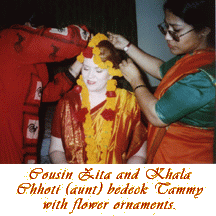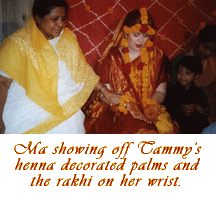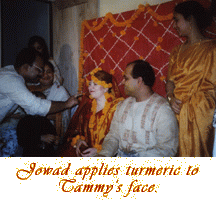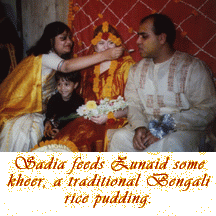
The Gae Halud (Ga.e ho-luTH), translated, means the turmeric
ceremony. This ceremony is more a cultural artifact than a religious
one, and originates from ancient Bengali tradition. In a typical
Bengali Muslim wedding, the Gae Halud precedes the Akht. There are two such ceremonies, one for the
bride and one for the groom. The spice turmeric is a traditional
complexion enhancer, and the whole concept of this ceremony is to
help the bride and groom get all "prettied up" for the
wedding. While we had all accoutrements of a traditional Gae Halud,
we combined the two ceremonies into one.
The bride's Gae Halud usually occurs first, with a small party of
the groom's family and close friends (sans the groom) travelling
to the bride's home. They bring gifts for the bride such as saris,
jewels, cosmetics and other items for the bride to wear until the
wedding day. The gifts are all colorfully wrapped and are carried
upon woven bamboo trays.
The bride's family and friends will greet the groom's family at
the gate with morsels of sweets and flower petals. Traditionally,
women wear yellow saris with red borders. Red and yellow are the
traditional colors of Bengali weddings. (Now you know the reason
for our wedding site's color theme.) Men usually wear punjabis,
which is a long silken tunic.
Flowers are everywhere, and alpana patterns (an inricate
pattern based on a paisley motif) decorate the room. The bride,
who is dressed in a sari and wearing flower ornaments, sits on a decorated dias
that has been specially constructed for the occasion. The groom's
mother ties a rakhi (a golden fringed bracelet-type
ornament) around the bride's wrist. This symbol of betrothal is
not to be taken off until after the wedding. People then come to
the dias one by one and place a bit of
turmeric paste upon the bride's face, as well as a token amount
of the turmeric on their own face. Each person then feeds
the couple something sweet, such as kheer (a rice porridge),
to the bride. The groom's Gae Halud is analogous to the bride's.
|
![[ back ]](common_back.gif)
![[ more pictures ]](common_more_pictures.gif)